Table of Contents
ToggleWhat Is Graphic Design?
Graphic design is more than just creating attractive visuals—it is a powerful communication tool that shapes how people perceive a brand. From logos and social media creatives to websites and marketing materials, graphic design plays a crucial role in building identity, trust, and engagement.
In today’s digital world, first impressions matter. A well-designed visual can instantly capture attention, convey a message, and leave a lasting impression. That’s where thoughtful and strategic graphic design makes the difference.
- Visual Identity Design:
Creates the look and feel for a brand (logos, color palettes, typography) to build an emotional connection and recognition.
Produces visuals for campaigns (social media graphics, flyers, ads) to attract customers and drive sales.
- User Interface (UI) Design:
Focuses on the interactive elements of apps, websites, and software (buttons, menus) to ensure they are intuitive and user-friendly.
- Publication Design:
Deals with layouts for printed and digital long-form content like books, magazines, and newsletters.
- Packaging Design:
Designs the look of product packaging to protect the product and entice consumers at the point of sale.
- Motion Graphics Design:
Creates animated graphics for videos, GIFs, and interactive elements.
- Environmental Graphic Design:Integrates design into physical spaces, such as signage, museum exhibits, and wayfinding systems, to create memorable experiences.
Graphic Designing
Graphic design is the art of combining creativity, typography, color, and layout to communicate ideas visually. It bridges the gap between a brand and its audience by transforming concepts into meaningful designs that inform, inspire, and persuade.
Whether it’s a minimal logo or a bold promotional banner, every design element has a purpose and tells a story.
Why Graphic Design Matters for Your Brand
Strong graphic design helps brands stand out in a crowded market. It creates consistency across platforms and builds recognition over time. When visuals are aligned with brand values, they increase credibility and emotional connection with the audience.
Professional design:
Enhances brand identity
Improves user experience
Builds trust and professionalism
Boosts marketing and engagement
Core Elements of Effective Graphic Design
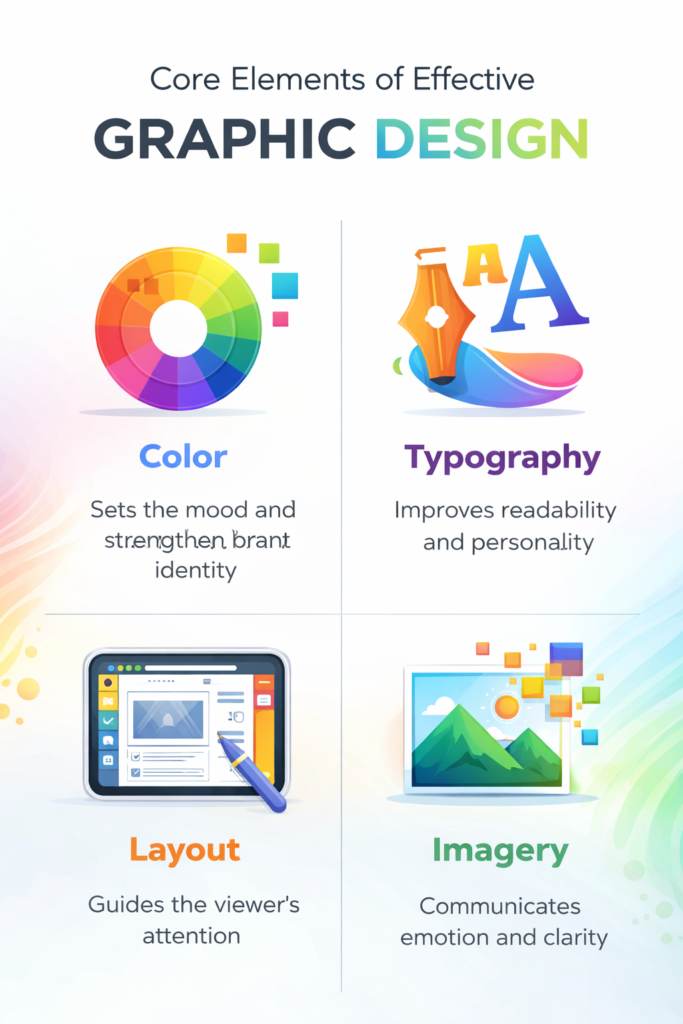
Great design is built on a balance of creativity and strategy. Some key elements include:
Color: Sets the mood and strengthens brand identity
Typography: Improves readability and personality
Layout: Guides the viewer’s attention
Imagery: Communicates emotion and clarity
When these elements work together, the result is a design that is both visually appealing and functional.
My Approach to Graphic Design
With the rise of digital platforms, graphic design has become more dynamic than ever. Social media posts, website interfaces, digital ads, and branding assets all require designs that are responsive, engaging, and user-focused.
Modern graphic design is not just about looking good—it’s about solving problems, delivering messages clearly, and creating memorable experiences across devices.
Final Thoughts
Graphic design is the visual voice of your brand. When done right, it transforms ideas into impactful visuals that speak louder than words. Investing in professional graphic design is an investment in your brand’s growth, recognition, and success.Graphic design is a craft where professionals create visual content to communicate messages. By applying visual hierarchy and page layout techniques, designers use typography and pictures to meet users’ specific needs and focus on the logic of displaying elements in interactive designs to optimize the user experience.